





Quick Controls
- Mouse → Select map and interface actions. Start from a chosen location.
- Attack slider → Set the troop share. Check the commitment before attacking.
- Building controls → Choose infrastructure. Match the structure to population, trade, or defense.
High Score Tips
- Compare terrain costs before choosing the first expansion route.
- Leave enough troops to defend the border after an attack.
- Read whether the next building solves a population, income, or protection problem.
Expand a territory, manage troop commitment, and build the economy needed to hold a changing map.
- Game type
- Territory strategy
About OpenFront.io
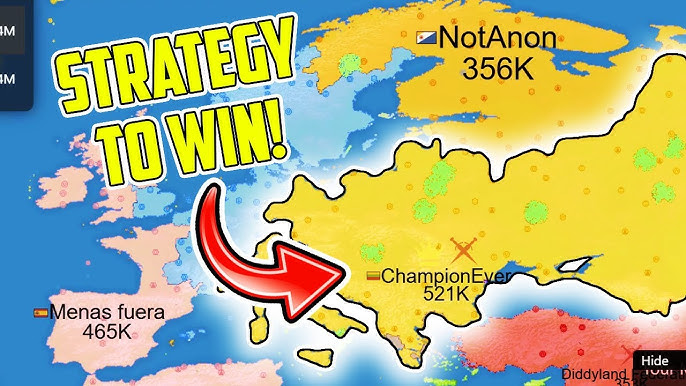
OpenFront.io is a territory strategy game about expansion, population, economy, and diplomacy. You choose a starting location, claim land, and meet neighboring factions as the map fills. An attack slider controls the share of troops committed, making expansion a resource decision rather than a click toward unlimited free territory.
Infrastructure changes what the territory can support. Cities raise population capacity, ports connect trade and naval options, and factories support trade networks. Defensive structures protect important areas, while alliances affect which borders need attention. Growth works best when those systems agree: gaining more land is less useful if the next attack leaves an exposed border or the economy cannot support the position.
How to Play OpenFront.io
Grow and defend the territory while building enough population and economic support to dominate the selected map.
- Choose the map, lobby option, and a starting location with readable nearby terrain.
- Claim open land and inspect the troop share selected by the attack slider.
- Build infrastructure for the need that currently limits growth or defense.
- Read neighboring factions and alliance choices before committing to another border attack.
Controls & Timing
An attack spends defensive strength
The slider selects how much of the troop pool is committed. Check the border left behind as well as the land you hope to gain.
Buildings solve different limits
Cities, ports, factories, and defenses have different roles. A purchase should address a visible bottleneck rather than simply adding another structure.
Controls
| Input | Action | When to use |
|---|---|---|
| Mouse / displayed map actions | Select a location or action | Manage territory through the interface. |
| Displayed attack slider | Set attack troop share | Choose a commitment before expansion. |
| Displayed building choices | Construct infrastructure | Develop population, income, or defense. |
High Score Tips
- Read the first terrain transition. Plains, highlands, and mountains have different capture difficulty. A start with accessible nearby land can be easier to develop than one hemmed in by costly terrain.
- Compare gain with the remaining defense. A successful expansion can still weaken the border. Avoid evaluating an attack only by the land it promises.
- Name the building's job. Population capacity, trade income, and border protection are different problems. Choose the infrastructure that addresses the active limit.
- Treat an alliance as a map decision. It changes where attention and defense are needed. Reconsider another attack after diplomatic conditions change rather than following the old border plan automatically.
Key Features
- Terrain-based expansion: Different ground changes capture difficulty.
- Troop commitment control: The attack slider exposes a resource trade-off.
- Economic infrastructure: Cities, ports, and factories support growth in different ways.
- Diplomacy and defense: Neighbors influence where the next investment belongs.
Frequently Asked Questions
Is OpenFront.io an FPS?
No. It is a map-based territory strategy game. The main decisions concern expansion, troop share, buildings, and diplomacy rather than aiming a firearm or driving through a 3D world.
Why not send the maximum troops every time?
The troops committed to an attack also affect the strength left for defense. Compare the expected gain with the border pressure that remains after the commitment.
Are cities and ports interchangeable upgrades?
No. Cities support population capacity, while ports connect trade and naval possibilities. Choose the structure for the problem you actually need to solve.
Why check diplomacy before another attack?
An alliance or neighboring threat changes which borders need support. A route that looked sensible earlier may leave the wrong area exposed after the diplomatic situation changes.