





Quick Controls
- WASD on foot → Move the character. Explore the selected city map.
- WASD in a vehicle → Drive. Read the current ride's behavior.
- Displayed interaction → Change activity. Follow the build's prompt for entry and equipment actions.
High Score Tips
- Choose a short activity before exploring the entire city.
- Read vehicle entry prompts instead of assuming an F binding.
- Compare a purchase with the activity you intend to try next.
Explore a ragdoll city sandbox, choose an activity, and use task earnings for vehicles or equipment.
- Classification
- 3D
About Dude Theft Auto
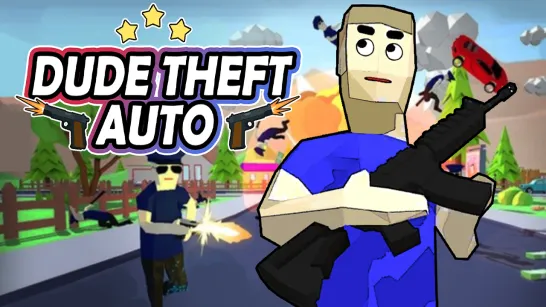
Dude Theft Auto is a ragdoll-style open-world sandbox with several maps and ways to play. You can explore neighborhoods, use vehicles, interact with the city, or pursue the tasks and mini-quests that provide money. The attraction is choosing an activity rather than following one mandatory mission order.
That freedom benefits from a small plan. Pick a destination or task, learn how the current character or vehicle responds, and use the reward for something that supports the next activity. The vehicle selection includes cars, bikes, tanks, and helicopters, but a shared WASD input does not mean all of them handle identically. Read the current interaction before treating another sandbox game's enter, fire, or flight key as the binding here.
How to Play Dude Theft Auto
Choose an exploration or task goal and use the sandbox systems to complete it without relying on an assumed linear campaign.
- Select an available map or mode and choose a nearby activity.
- Use WASD to explore the starting area and read the relevant interaction prompts.
- Try a vehicle or complete a displayed task, learning its controls before a longer route.
- Review earned money and purchase equipment that supports the next activity you want to attempt.
Controls & Timing
A chosen activity gives exploration direction
A short task or destination makes the city easier to learn. You can change the plan without needing to complete an invented campaign sequence.
Vehicle context changes movement
WASD controls the character and vehicles in their respective states. Inspect the current ride before expecting the same turn or movement response.
Controls
| Input | Action | When to use |
|---|---|---|
| WASD on foot | Move character | Explore the current neighborhood. |
| WASD while driving | Control vehicle | Follow a chosen city route. |
| Current displayed interaction | Use the selected activity | Read the specific entry or equipment prompt. |
High Score Tips
- Choose one nearby loop first. Travel to a recognizable place and back before expanding the route. That makes later vehicle experiments easier to orient.
- Read task rewards before buying. A vehicle, weapon, and equipment item serve different activities. Spend toward the next goal rather than treating every option as progression you need immediately.
- Learn a vehicle in open space. Establish its response before taking it through a crowded or complicated route. A shared key layout does not establish identical handling.
- Separate exploration from mission claims. Follow the task actually displayed by the sandbox instead of searching for a story objective imported from another city-action game.
Key Features
- Open-world activity choice: Exploration does not depend on one strict goal order.
- Ragdoll presentation: Physics-driven characters define the sandbox style.
- Vehicle variety: Ground and airborne rides offer different exploration roles.
- Task-funded purchases: Earnings connect chosen activities with further equipment.
Frequently Asked Questions
Do I need to follow a fixed story?
This is a sandbox without a fixed sequence of goals. Choose exploration or a displayed task, then use its result to decide what to try next.
How should I learn a new vehicle?
Choose a short route with open space for turning. Learn how the selected ride moves and responds before using it in a crowded area or attempting a faster journey.
What can task earnings buy?
Available purchases include vehicles, weapons, and equipment. Compare the available purchase with the activity you want to attempt instead of assuming each option changes the same capability.
Why start with a short route?
A familiar loop provides landmarks while you learn character or vehicle handling. It is easier to judge a new ride when the destination is already understood.